Caribbean Hidden Coves
Beyond the typical anchorages: managing trade winds while exploring volcanic peaks.
The Dynamics of the Trade Winds
The Caribbean is synonymous with pristine sailing conditions, largely due to the reliable eastern Trade Winds. However, these same winds create significant logistical challenges when planning extended land excursions in the Leeward and Windward islands. While the windward sides of the islands offer rugged beauty, they are entirely unsuitable for anchoring. Therefore, all operations must be staged from the protected leeward coasts.
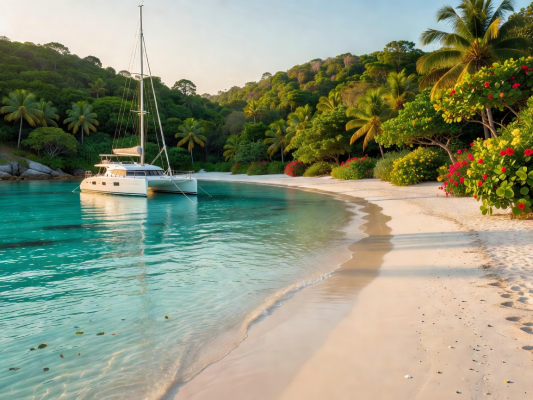
The choice of vessel plays a critical role here. Monohulls with deep drafts are often restricted to major bays and established moorings, meaning longer tender rides to shore. Conversely, shallow-draft catamarans can access secluded, tucked-away coves, dramatically shortening the transit time to remote trailheads and isolated beaches.
Transitioning to the Rainforest
Once ashore, the Caribbean terrain transitions rapidly from white sand to dense, volcanic rainforest. Itineraries in locations like St. Lucia (with its iconic Pitons) or the sulfur springs of Dominica require careful staging. Tender landing points are often unimproved beaches, necessitating "wet landings" where guests must wade through shallow surf.
Footwear and gear management is essential. Guests transition from bare feet on teak decks to waterproof hiking boots traversing muddy, root-strewn paths. We coordinate with local guides to ensure that trail conditions are scouted in advance, particularly during the shoulder months of the rainy season when flash floods in narrow gorges pose a legitimate risk.
Pros and Cons of Caribbean Land Excursions
- Pro: Warm, consistent climate and predictable primary wind directions.
- Pro: Incredible biodiversity on land, featuring endemic bird species and unique flora.
- Con: High humidity and dense terrain make inland hiking physically demanding.
- Con: Limited road infrastructure on smaller islands can complicate vehicle staging.
Strategic Recommendations
We recommend a hybrid itinerary structure for the Caribbean. Mornings are best dedicated to land excursions before the tropical heat peaks and the trade winds build to their afternoon maximums. By midday, guests should be transitioning back to the vessel for water-based activities like snorkeling over protected reefs, taking advantage of the intense midday sun for optimal underwater visibility.
Exploring the Caribbean's hidden coves requires a nuanced understanding of bathymetry and local micro-climates. The goal is to anchor in the shadow of the peaks, execute the land mission early, and return to the sanctuary of the yacht before the afternoon squalls roll off the mountains.